


Royal expert reveals what happens when a future monarch or their spouse can't conceive
Royal expert reveals what happens when a future monarch or their spouse can't conceive

Charl WrightSat, August 1, 2026 at 9:00 AM UTC
0
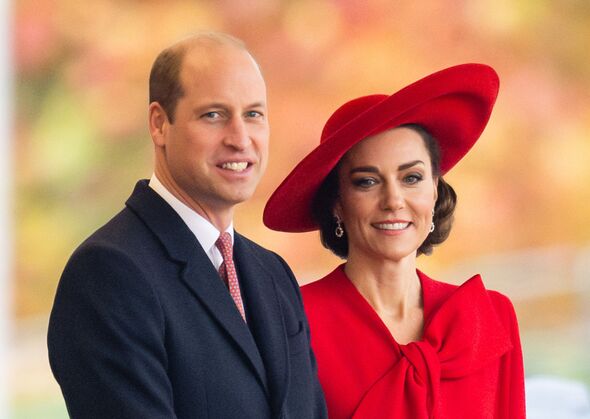
A royal historian has delved into the rules of the line of succession (Image: Getty Images)
A royal expert has revealed exactly what happens in the modern era if a monarch or their spouse is unable to conceive a child naturally.
Royal historian Kelly Claman, who has studied the Windsors extensively, addressed the line of succession in an exclusive interview with the Daily Express US. Kelly noted that cases of infertility are not unheard of amongst royals, and that this actually led to The Firm's ancestors not becoming part of the British Royal Family.
The conversation came amid continuing unverified rumors that potential spouses of UK royals must undergo premarital fertility testing. This comes as a royal expert alleged what Prince Harry most "hated" about royal life.
Prince Harry and Meghan 'can't resist' UK return as Althorp visit 'shocks' King Charles
Royal expert condemns Meghan Markle's 'vulgar act' as Prince William said to be 'fuming'
The rumors have circulated for decades, historically, because ensuring the line of succession was a matter of state importance.
In 2023, the rumors were then echoed in Tom Quinn's Gilded Youth: An Intimate History of Growing Up in the Royal Family, where he alleged that, as a "usual precaution" for a non-royal marrying a future king, Kate Middleton was required to undergo fertility testing to ensure she could provide an heir.
Quinn asserted that if she had been found infertile, the marriage would likely have been called off.
He then claimed that similarly, Princess Diana underwent health checks to examine her fertility. However, none of these rumors has been confirmed and is considered baseless.
Nonetheless, the conversation brought up the question: What happens if a monarch or their spouse is unable to conceive naturally?
Advertisement
Answering this question for the Daily Express US, Kelly Claman said, "If the spouse of the heir to the throne were infertile, it would not affect the heir's right to succeed.
"They would still become monarch, but if they died without surviving legitimate children, the throne would simply pass to the next eligible person in the line of succession, whether that is a sibling, niece or nephew, cousin, or in some cases, a more distant relative."
Kelly then explained that this had happened in the past and actually led to Queen Victoria becoming monarch in 1819.
"There are several historical precedents for this. When King William IV died in 1837, he had no surviving legitimate children despite fathering numerous illegitimate ones (who were ineligible to inherit the crown)," the historian revealed. "As a result, the Crown passed to his niece, Queen Victoria."
However, according to Kelly, in history there have been more "dramatic" examples, such as with Queen Anne, who endured seventeen pregnancies but had no surviving children."
When Anne died without an heir, Britain was left needing a monarch, and because of succession laws, the next eligible living heir was George, Elector of Hanover, Queen Anne's second cousin.
"His accession as King George I marked the beginning of a new royal dynasty, the House of Hanover," Kelly added.
Back to modern times, the royal expert told us that if Prince George, for example, were unable to have children for any reason, the crown would unsurprisingly go to his sister, Princess Charlotte, and so on.
Finally, while royals are allowed to adopt children or use a surrogate, the child would not be considered an heir to the throne. This is due to the "Heirs of the Body" rule, whereby titles and the Crown can only pass to biological, legitimate descendants. Unfortunately, children born via surrogacy also wouldn't be eligible.
Source: “AOL Entertainment”
